CKYC 2.0 Launch Simplifies Digital KYC: Completing the Know Your Customer (KYC) process is an essential part of using financial services in India. Whether opening a bank account, investing in mutual funds, buying an insurance policy, or applying for a loan, customers have traditionally been required to submit the same identity and address documents multiple times.
This repetitive process often consumes time and creates unnecessary inconvenience. To simplify customer verification and make financial services more efficient, the government is introducing CKYC 2.0, an upgraded version of the Central KYC Registry.

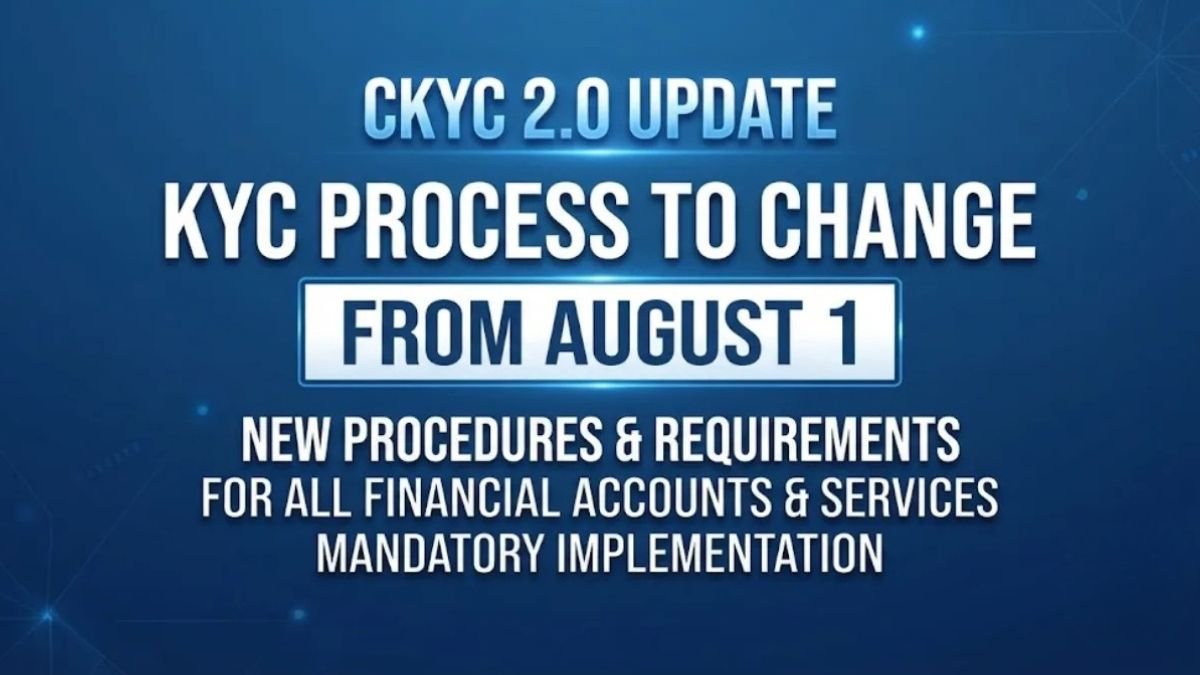
The new system will be rolled out in phases from August 1 and aims to make KYC completely digital, faster, more secure, and customer-friendly. By allowing institutions to access verified KYC records with the customer’s permission, CKYC 2.0 is expected to reduce paperwork and improve the overall onboarding experience.
CKYC 2.0 Launch Simplifies Digital KYC
| Feature | CKYC 1.0 | CKYC 2.0 |
|---|---|---|
| KYC Process | Mostly manual | Fully digital |
| Document Submission | Physical or scanned copies | Digital records from central database |
| Customer Consent | Limited | Mandatory OTP-based consent |
| Verification | Manual verification | Automated verification |
| Data Access | Institution-specific | Centralized with customer approval |
| Technology Used | Basic digital system | AI, Real-Time APIs, automation |
| Record Updates | Slower | Instant updates |
| Duplicate Records | Higher possibility | Significantly reduced |
| Security | Standard | Enhanced digital security |
| Customer Experience | Time-consuming | Faster and paperless |
| Data Synchronization | Delayed | Real-time |
| Fraud Prevention | Limited | Improved through digital verification |
| KYC Reuse | Limited | Across multiple financial institutions |
| Objective | Basic customer verification | One Nation One KYC ecosystem |
What Is CKYC 2.0?
CKYC 2.0 is the latest version of India’s Central KYC Registry, designed to store customer verification details in a secure digital database. Once a person’s KYC is completed, the verified information can be reused across multiple financial institutions without requiring the same documents to be submitted repeatedly.

The upgraded platform focuses on improving speed, transparency, and security. Instead of manually collecting and verifying physical documents every time, authorized institutions can access verified customer information after obtaining proper consent.
Why Is the Government Introducing CKYC 2.0?
The primary objective of CKYC 2.0 is to create a simple, unified, and secure KYC ecosystem across India’s financial sector. The government and financial regulators want to reduce paperwork, eliminate duplicate verification processes, and improve customer convenience.
Another important goal is to strengthen fraud prevention and improve data accuracy. A centralized digital system reduces the chances of duplicate records, outdated information, and manual verification errors while making financial services more efficient.
How CKYC 2.0 Will Work
Under CKYC 2.0, customers completing KYC for the first time will receive a unique 14-digit CKYC Identifier. This identifier acts as a permanent digital KYC reference that can be used while accessing banking, insurance, mutual fund, and other financial services in the future.
Whenever a customer approaches a new financial institution, the organization will first request permission to access the existing CKYC record. After the customer provides consent and verifies the request using an OTP, the institution can securely retrieve the verified information directly from the Central KYC Registry.
Consent-Based Digital Verification
One of the biggest improvements in CKYC 2.0 is its consent-based verification system. No financial institution can access a customer’s KYC information without receiving explicit approval from the individual.
This approach enhances privacy and gives customers greater control over their personal information. Since institutions retrieve verified digital records directly from the central database, there is no longer a need to repeatedly submit photocopies or scanned copies of identity documents.
Difference Between Old CKYC and CKYC 2.0
The earlier CKYC system relied heavily on physical documents, scanned copies, manual uploads, and delayed record synchronization. These limitations often resulted in duplicate entries, outdated information, and longer processing times whenever customers applied for financial products.
CKYC 2.0 introduces a fully digital infrastructure supported by Artificial Intelligence, automated verification, real-time APIs, consent-based authentication, and advanced digital record management. These improvements are expected to make the KYC process significantly faster, more reliable, and easier for both customers and financial institutions.
Role of Real-Time APIs in CKYC 2.0
Real-time APIs are one of the most important technological upgrades in the new system. They allow banks, insurance companies, mutual fund houses, and other regulated financial institutions to connect directly with the Central KYC Registry.
This direct integration enables instant retrieval of customer records and immediate updates whenever necessary. As a result, KYC verification can be completed within seconds instead of taking several days, improving both operational efficiency and customer experience.
Understanding the ‘One Nation One KYC’ Vision
CKYC 2.0 supports the government’s broader vision of creating a unified KYC system across the country. Under the “One Nation One KYC” approach, customers will no longer need to complete separate KYC procedures for every financial institution they use.
A single verified KYC record can be securely shared across banks, insurance companies, mutual fund providers, NBFCs, and other regulated entities after customer consent. This unified approach promotes consistency, reduces duplication, and simplifies access to financial services nationwide.
Benefits for Customers and Financial Institutions
For customers, CKYC 2.0 offers greater convenience, improved security, faster account opening, reduced paperwork, and better control over personal information. The new system minimizes repetitive document submissions while making financial transactions smoother and more efficient.
Financial institutions also benefit through quicker customer onboarding, lower operational costs, improved compliance, better data accuracy, and enhanced fraud prevention. The centralized digital infrastructure supports faster verification while improving the overall efficiency of India’s financial ecosystem.

CKYC 2.0 represents a major step toward the digital transformation of India’s financial sector. By replacing traditional document-heavy verification with a secure, consent-based digital system, it promises a faster, safer, and more transparent KYC experience for millions of customers.
As the phased rollout begins from August 1, customers can expect fewer paperwork requirements and quicker access to financial services. With technologies such as Artificial Intelligence, real-time APIs, and centralized digital records, CKYC 2.0 moves India closer to achieving the vision of a seamless “One Nation One KYC” ecosystem.
Disclaimer: This article is intended for informational purposes only. The implementation timeline, features, and operational guidelines of CKYC 2.0 may be updated by the Government of India or relevant financial regulators. Customers should refer to official notifications issued by authorized agencies and their respective financial institutions for the latest information.